What Do Isopods Eat? A Complete Feeding Guide
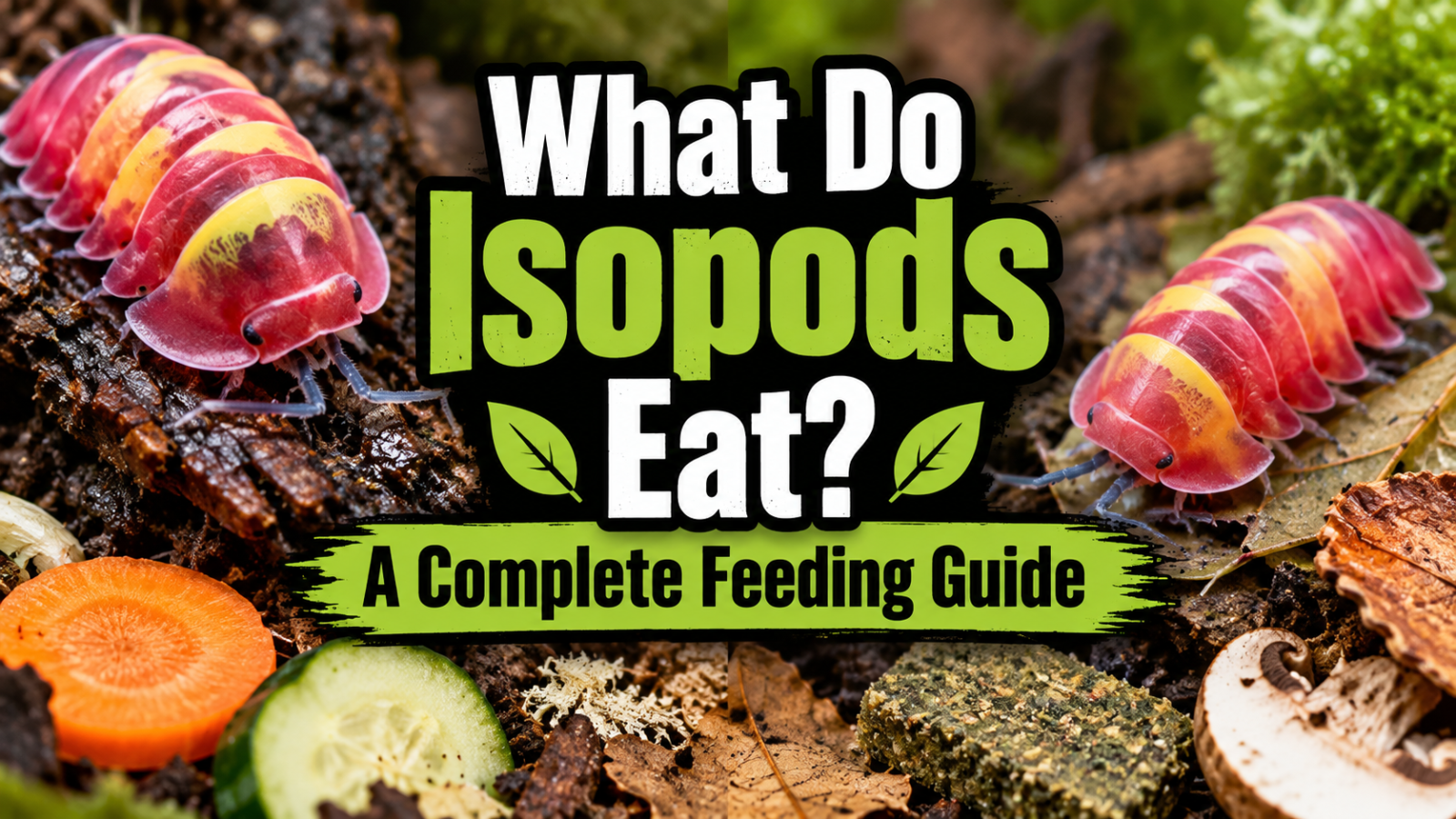
Isopods eat decaying organic matter — mainly leaf litter and rotting wood — plus a calcium source and occasional protein. In a bioactive vivarium they also process animal waste, shed skin and leftover food, which is what makes them such a valuable clean-up crew.
Feeding isopods is simple once you know the basics. Here’s everything that should be on the menu.
The staples: leaf litter and wood
The bulk of an isopod’s diet is dead leaves and decaying wood. Oak, beech and magnolia leaf litter, plus soft rotting wood, provide food and cover at the same time. Keep a generous layer in the enclosure and top it up as it’s eaten — this alone sustains most colonies.
Calcium: essential, not optional
Isopods need calcium to harden their shells when they moult. Provide cuttlefish bone, limewood or crushed eggshell and leave it in permanently. Without it, colonies grow slowly and breed poorly — more in do isopods need calcium.
Protein: occasional top-ups
A little protein now and then keeps a colony healthy and breeding well — fish flake, dried shrimp or a specialist isopod food once a week or so. Don’t overdo it: too much protein (or food generally) causes mould and attracts mites.
What isopods clean up in a vivarium
In a bioactive setup, isopods also eat droppings, shed skin, dead plant matter and leftover feeder insects — turning it all into nutrient-rich frass for your plants. That’s their clean-up crew role in action. For full husbandry, see our Isopod Care Guide.
Frequently Asked Questions
Leaf litter, rotting wood, decaying plant matter, droppings, shed skin and leftover food — plus a calcium source and the occasional protein top-up. They recycle all of it into nutrient-rich frass for your plants.
Keep leaf litter and a calcium source available at all times, and add a small amount of protein about once a week. Feed lightly and remove anything that goes mouldy to avoid mite outbreaks.
Yes — small amounts of vegetables like carrot, cucumber or squash make a good occasional treat. Offer little pieces, remove any leftovers before they mould, and keep leaf litter as the main diet.
Building a colony? Browse UK captive-bred isopods from Bioactive Bugs UK.