Do Isopods Need Calcium? A Bioactive Feeding Guide
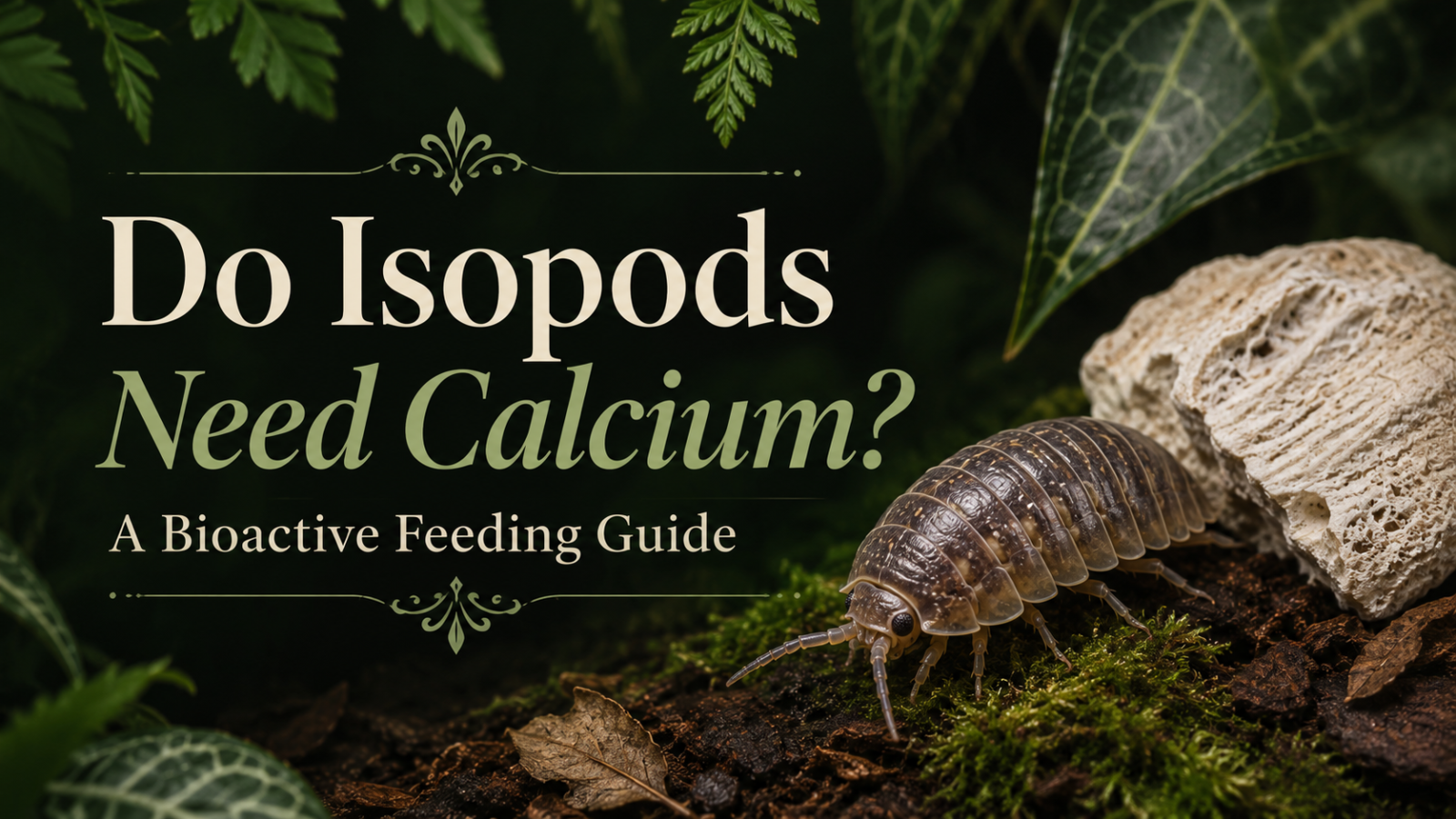
Yes — isopods need a steady source of calcium to build and moult their exoskeletons. Without it, colonies grow slowly, breed poorly and can develop moulting problems. Provide cuttlefish bone, limewood, crushed eggshell or a dedicated calcium supplement and keep it available at all times.
Calcium is one of the most overlooked parts of isopod husbandry, yet it makes a big difference to colony health. Here’s why it matters and how to provide it.
Why do isopods need calcium?
Isopods are crustaceans with a hard, calcium-rich exoskeleton. As they grow they moult repeatedly, and each new shell needs calcium to harden properly. A colony short on calcium will show slow growth, reduced breeding and soft or failed moults — so a reliable calcium source is essential for a thriving population.
Best calcium sources for isopods
- Cuttlefish bone: the classic choice — cheap, long-lasting and easy for isopods to graze.
- Limewood (calcium-rich wood): doubles as food and a calcium source.
- Crushed eggshell or oyster shell: a simple, accessible supplement.
- Dedicated isopod calcium powders/blends: often combined with protein for a complete supplement.
How to provide it
Simply place a piece of cuttlefish bone or limewood in the enclosure and leave it there — isopods will graze as needed. Keep it topped up, and pair it with a varied diet of leaf litter, rotting wood and occasional protein. Our Isopod Care Guide covers the full feeding picture.
Signs of calcium deficiency
Watch for a colony that has stopped growing or breeding, or individuals struggling to moult (appearing stuck mid-moult or with soft shells). These often point to a lack of available calcium — adding a fresh source usually turns things around.
Frequently Asked Questions
Cuttlefish bone is the most popular option, along with limewood, crushed eggshell or oyster shell, and dedicated isopod calcium supplements. Leave a piece in the enclosure permanently so the colony can graze as needed.
A calcium-deficient colony grows slowly, breeds poorly and can suffer failed or soft moults. Because isopods need calcium to harden each new exoskeleton, a shortage directly limits how well the population develops.
Just keep it topped up. A piece of cuttlefish bone lasts a long time — replace it when it’s been grazed down or starts to break apart, so there’s always calcium available.
Stocking your colony? Browse healthy, UK captive-bred isopods at Bioactive Bugs UK.