Why Springtails Are Essential For Bioactive Setups
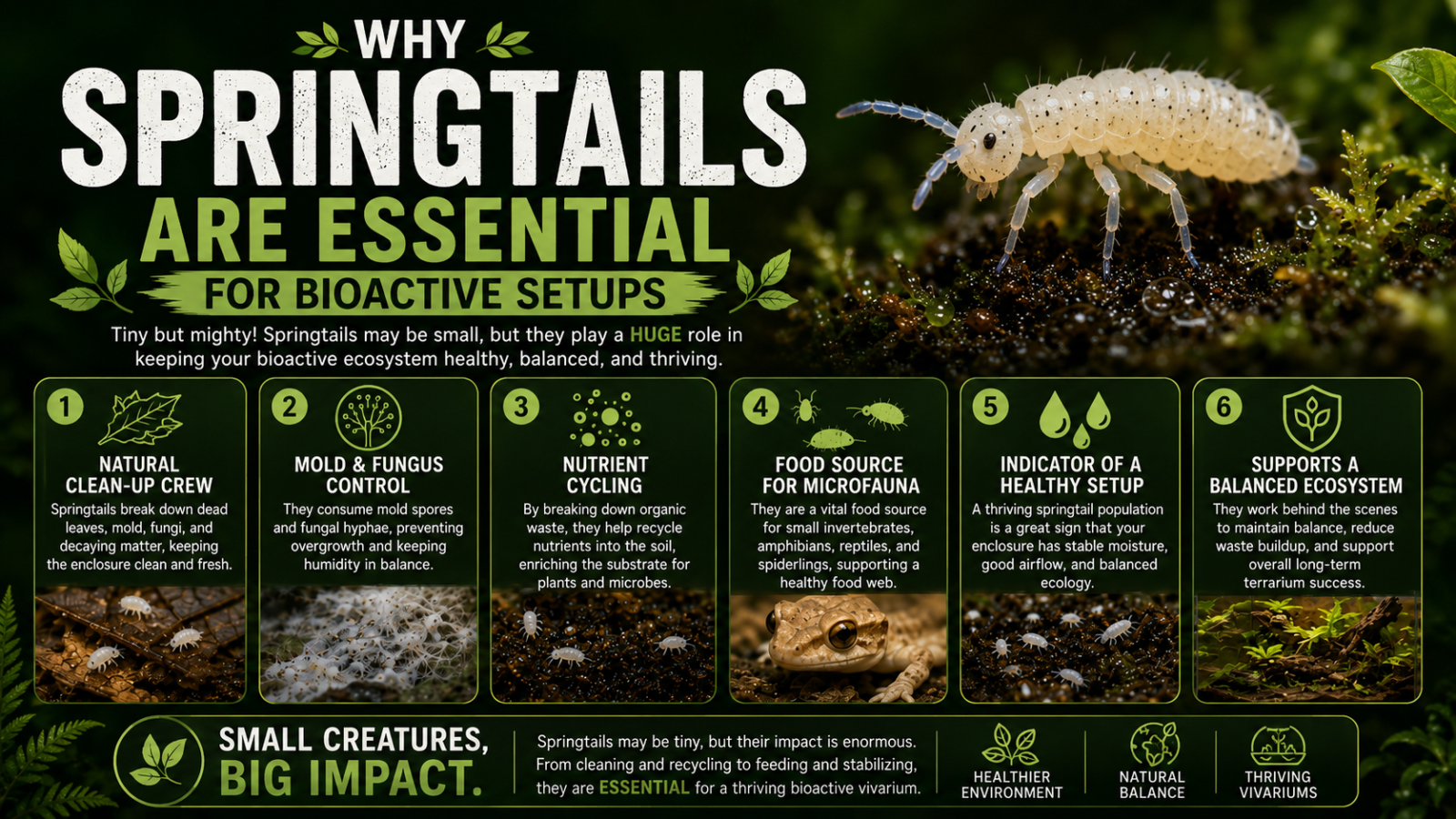
If you’ve spent any time researching bioactive vivariums, you’ll have come across one word again and again: springtails. These tiny, often-overlooked arthropods are one of the hardest-working members of any clean-up crew, and in this article we’ll explain exactly why they’re considered essential for a healthy bioactive setup.
What Are Springtails?
Springtails (Collembola) are minute hexapods, usually just 1-3mm long, found in soil and leaf litter all over the world. They’re named for the furcula, a tail-like, fork-shaped appendage that allows many species to “spring” into the air when disturbed. In the wild they’re one of the most abundant soil organisms on the planet, quietly breaking down organic matter wherever they’re found.
In the hobby, two springtail species dominate: Tropical White Springtails (Folsomia candida) and various Temperate Springtails (Sinella curviseta and similar). Both are easy to culture, reproduce quickly, and thrive in the warm, humid conditions of a typical vivarium.
The Role Springtails Play In A Bioactive Vivarium
A bioactive vivarium relies on a “clean-up crew” of small invertebrates to process waste so that the enclosure becomes a genuinely self-sustaining ecosystem. Springtails are the foundation of that crew for several reasons:
- Mould and fungus control — springtails graze on mould spores and fungal growth before it can spread across substrate, wood or leaf litter.
- Waste breakdown — they consume decaying plant matter, shed skins, and small amounts of animal waste, helping to recycle nutrients back into the substrate.
- Live food — for many small or juvenile reptiles and amphibians (such as dart frogs and young geckos), springtails double up as a constant supply of nutritious live food.
- Population balance — a thriving springtail colony helps keep other unwanted micro-fauna, like mites, in check by competing for the same food sources.
Why Bioactive Setups Struggle Without Them
Without springtails (or another effective clean-up crew species), organic waste and mould can build up far faster than it breaks down. This leads to a damp, stagnant substrate that’s prone to mould blooms, unpleasant odours, and an environment where harmful bacteria can flourish. For enclosures housing amphibians or invertebrates that are sensitive to substrate quality, this can quickly become a welfare issue.
Adding a healthy springtail culture from the very start of a build means waste is being processed from day one — long before isopods or other larger clean-up crew species are established and breeding in numbers.
Tropical vs Temperate Springtails — Which Should You Choose?
Tropical White Springtails are the most popular choice for warm, humid setups such as dart frog vivariums, tropical isopod enclosures, and most reptile/amphibian bioactive builds, as they thrive at typical tropical vivarium temperatures (22-28°C). Temperate Springtails are better suited to cooler setups — bioactive tortoise tables, cooler terrariums, or unheated rooms — as they remain active at lower temperatures where tropical species can slow down or stall.
Many keepers choose to seed a new vivarium with both: a temperate culture to provide some activity if temperatures dip, and a tropical culture as the long-term primary clean-up crew once the enclosure has stabilised.
Getting Started With Springtails
The easiest way to introduce springtails to a new or existing enclosure is with a starter culture — a small tub already containing an active, breeding population along with food and a charcoal-based substrate. Simply tip a portion of the culture into your vivarium’s substrate, leaf litter, or cork bark crevices, and the colony will begin establishing itself within a few weeks.
For full setup advice — including housing, feeding, humidity and how to keep your culture thriving long-term — read our complete Springtail Care Guide.
Ready To Add Springtails To Your Setup?
Browse our range of healthy, captive-bred springtail cultures, including Tropical White and Temperate species in starter and large culture sizes — all bred in the UK and despatched quickly to arrive in great condition.