How To Breed Springtails Successfully
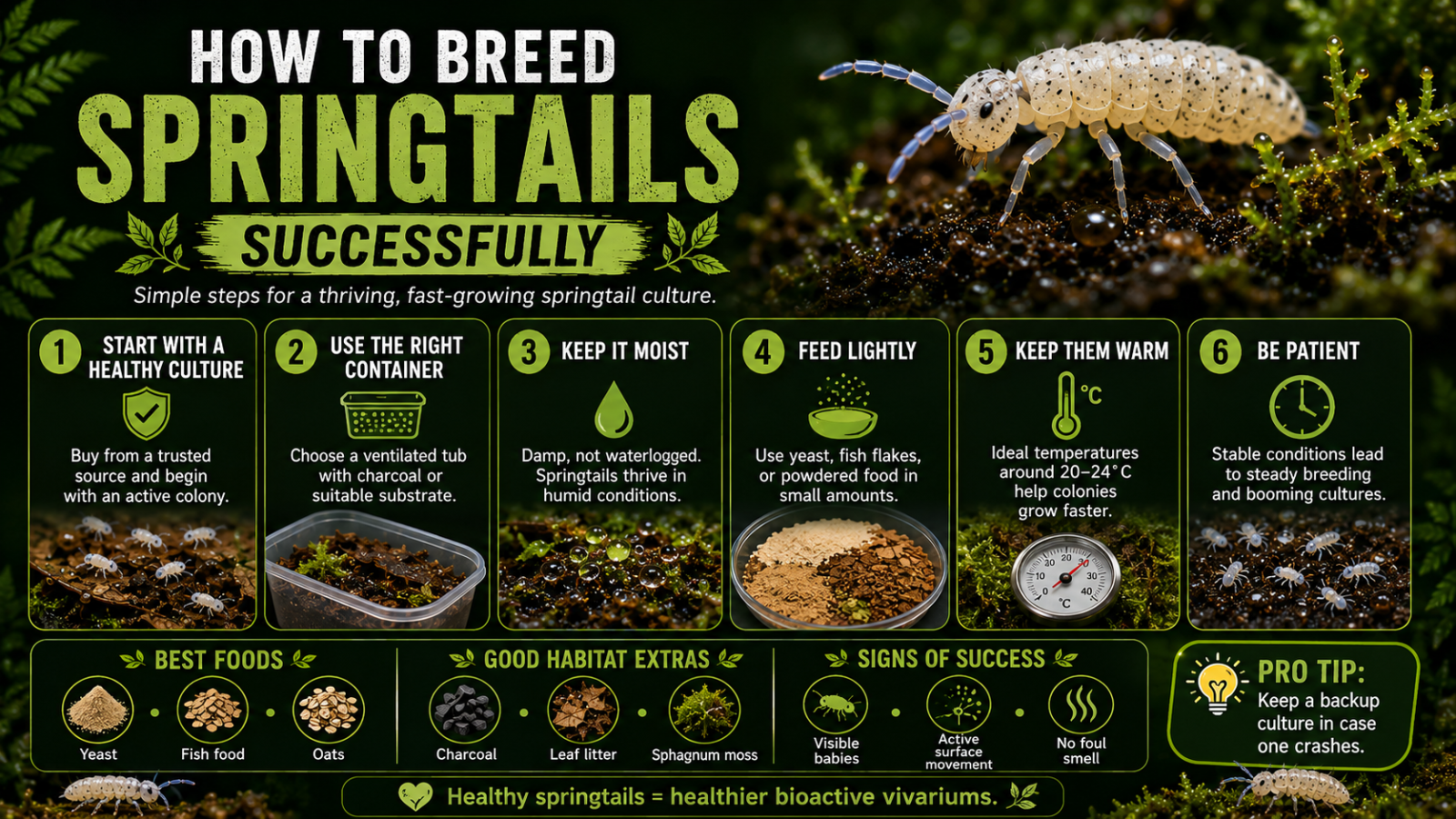
One of the best things about springtails is how easy they are to breed in large numbers — but a small handful of mistakes can quickly turn a thriving culture into a crashed one. In this guide we’ll walk through exactly how to set up, maintain, and multiply your springtail cultures so you always have a healthy supply on hand.
Why Breed Your Own Springtails?
Whether you’re maintaining a single bioactive vivarium or running several enclosures, having your own springtail cultures means you’ll always have a backup population ready to top up an established setup, seed a brand new build, or provide live food for amphibians and invertebrates — without having to order more in.
Setting Up A Culture Tub
Springtail cultures are typically kept separately from the vivarium itself, in simple plastic tubs with a lid. Here’s the basic setup:
- Container — any opaque or semi-clear plastic tub with a lid, ideally with a few small air holes (or a lid that isn’t fully airtight).
- Substrate — a 2-3cm layer of activated charcoal, plaster of Paris, or a charcoal/coir mix. Charcoal is popular because it helps control mould and makes springtails easy to spot against the dark background.
- Moisture — the substrate should be damp but never waterlogged. Mist regularly with dechlorinated water so the surface stays moist without standing water pooling at the bottom.
- Starter culture — add your starter culture to the prepared substrate, spreading it gently across the surface.
Feeding Your Culture
Springtails will eat mould, fungus, and decaying organic matter, but for a productive breeding culture it helps to provide a more reliable food source. Good options include:
- A pinch of dry active baker’s yeast sprinkled on the surface
- Fish flakes or spirulina powder
- Small pieces of boiled potato, sweet potato, or pumpkin
- Specialist springtail/isopod food mixes
Feed little and often — a small pinch every few days is usually enough. If you notice uneaten food growing mould that the springtails aren’t keeping up with, scale back the amount and feeding frequency.
Temperature And Humidity For Maximum Breeding Rate
Tropical White Springtails breed fastest at around 22-27°C with consistently high humidity. At room temperature in a typical UK home, cultures will still grow, just more slowly. If you want to speed up breeding for a large culture, consider keeping the tub on top of a warm appliance, on a heat mat set to a low temperature, or in a warm room — just avoid anything that could dry the culture out or overheat it.
For a full breakdown of ideal temperature and humidity ranges, see our Springtail Care Guide.
Splitting And Multiplying Cultures
Once a culture is established and you can see large numbers of springtails moving across the substrate (especially after misting, when they often surface), you can split it to create new cultures or top up vivariums:
- Prepare a second tub with fresh substrate using the same method as your original culture.
- Scoop a generous portion of substrate — ideally one that’s visibly teeming with springtails — into the new tub.
- Lightly mist both tubs and resume your normal feeding schedule.
- Within 1-2 weeks, both cultures should be active and growing again.
Common Reasons Cultures Crash — And How To Avoid Them
- Too wet — standing water at the base of the tub can drown springtails and encourage harmful bacteria. Tip out any excess water and reduce misting.
- Too dry — if the substrate dries out completely, the culture can collapse within days. Mist more frequently, especially in warm rooms.
- Mite infestations — grain mites can outcompete springtails for food. Reduce feeding, increase ventilation, and consider starting a fresh culture from an unaffected portion.
- Overfeeding — excess food that goes mouldy faster than it’s eaten can foul the substrate. Always feed conservatively.
Keep Your Vivarium Topped Up
Even a thriving vivarium benefits from periodic top-ups of springtails, especially after a bioactive clean-up crew has been heavily predated on by frogs, geckos or other inhabitants. Keeping one or two backup cultures running means you’ll never be caught short.
Need a fresh starter culture to begin breeding from? Browse our Springtail cultures, available in Tropical White and Temperate varieties.