Cherry Blossom Isopods: A Complete Care Guide
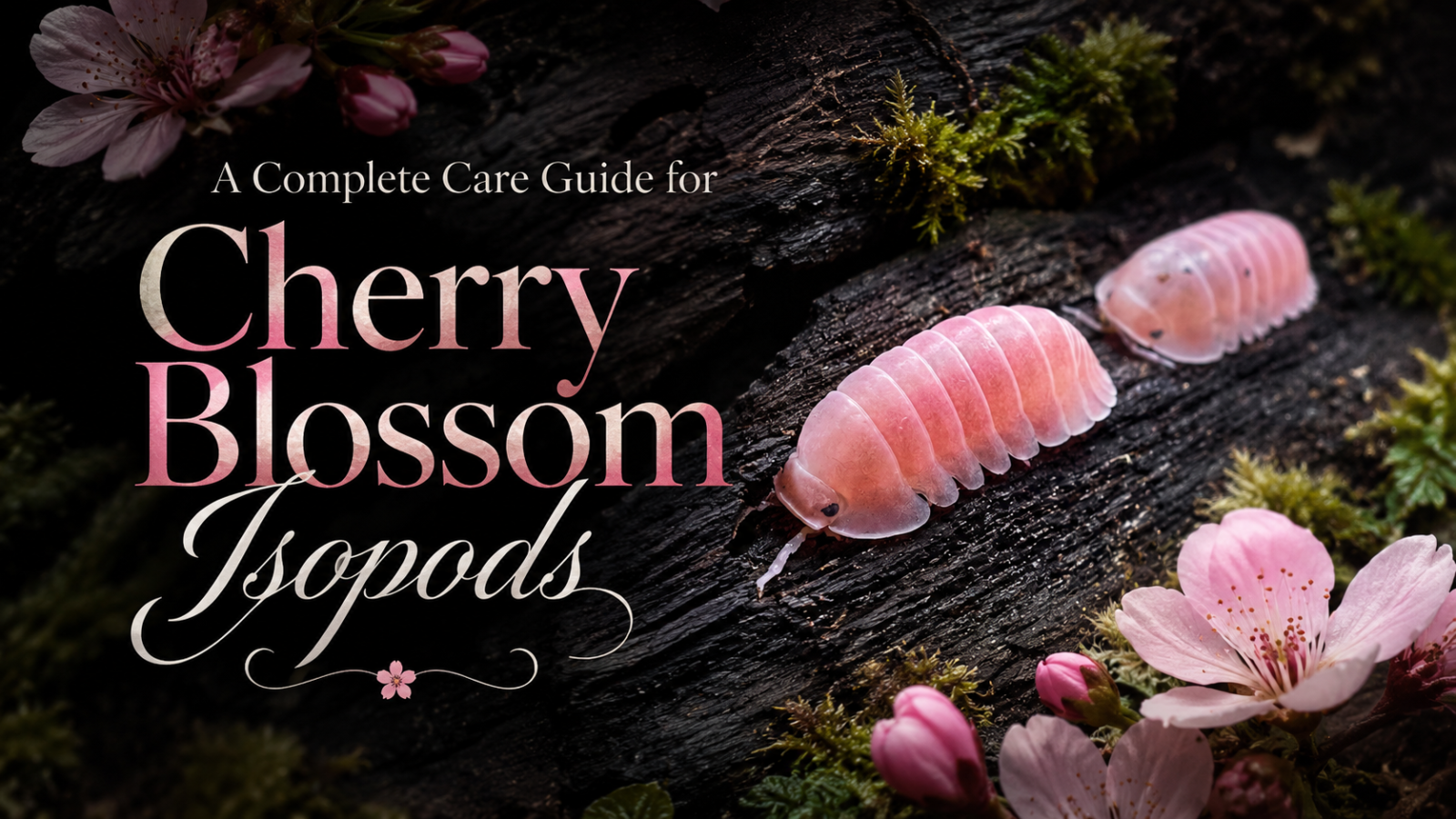
Cherry Blossom isopods (Cubaris sp.) are a beautiful blush-pink display species. Like other Cubaris they need stable warmth, high humidity and deep leaf litter, and they breed slowly — making them a rewarding choice for keepers ready to build a display colony.
With their soft pink colouring and creamy accents, Cherry Blossoms are one of the prettiest isopods in the hobby. Here’s how to keep them thriving.
What are Cherry Blossom isopods?
Cherry Blossom is a Cubaris species prized for its pink, petal-like colouring. Like most Cubaris, it’s a tropical, humidity-loving isopod kept as a display animal rather than a hard-working clean-up crew. They’re peaceful, stay fairly small, and do best in a stable, undisturbed enclosure. See our current Cherry Blossom isopods stock.
Enclosure and conditions
- Substrate: a deep mix of coco fibre, leaf mould and decaying wood to burrow into.
- Leaf litter: a generous layer of oak, beech or magnolia leaves as their main food and cover.
- Hides: cork bark and dark retreats where they feel secure.
- Calcium: cuttlefish bone or limewood, always available.
- Temperature & humidity: around 22–27°C with high, stable humidity and a moisture gradient, plus gentle ventilation.
Feeding
Leaf litter and rotting wood make up most of their diet. Add occasional protein (fish flake, dried shrimp) and keep calcium available at all times. Feed lightly and remove mouldy food to avoid mite outbreaks.
Breeding Cherry Blossom isopods
They breed slowly compared with hardy clean-up species, so patience pays off. With stable warmth, high humidity and an undisturbed enclosure, an established group steadily produces young over several months. Keep conditions consistent and resist disturbing the colony. For general husbandry, see our Isopod Care Guide.
Frequently Asked Questions
They’re best for keepers with a little experience. As a Cubaris species they’re more sensitive to humidity swings and breed more slowly than hardy clean-up crew isopods, so they reward stable, consistent conditions.
Slowly. An established colony builds gradually over several months under stable, warm, humid conditions, so it’s best to start with a small group and let them settle undisturbed.
Aim for roughly 22–27°C with high, stable humidity and a moisture gradient. A deep, moisture-retaining substrate and a partly-covered enclosure keep conditions even, while gentle ventilation prevents stale air and mould.
Browse our captive-bred Cherry Blossom isopods and the full isopods range at Bioactive Bugs UK.