Best Beginner Isopods For Bioactive Vivariums
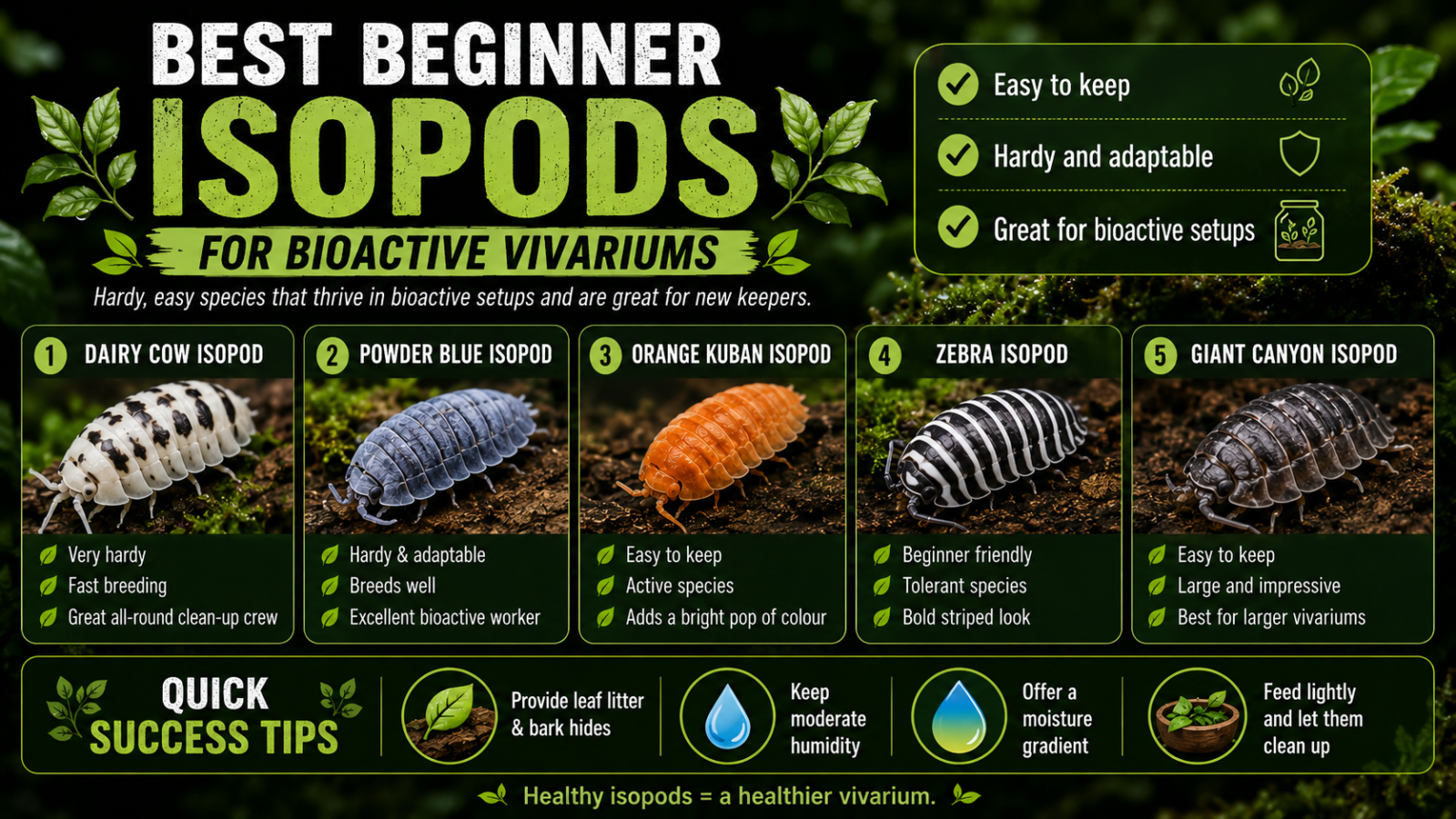
Isopods (commonly known as woodlice or pillbugs) are one of the most popular clean-up crew animals for bioactive vivariums — and for good reason. They’re hardy, easy to keep, breed readily, and come in dozens of colours and patterns. But with so many species available, where should a beginner start? Here are our top picks for first-time isopod keepers.
What Makes A Good Beginner Isopod?
Before diving into specific species, it helps to know what we’re looking for in a beginner-friendly isopod:
- Tolerant of a range of humidity and temperature — forgiving of small mistakes while you learn.
- Fast breeding — builds a self-sustaining population quickly, so losses from predation in display vivariums are easily replaced.
- Readily available and affordable — easy to source healthy stock and replace or expand your colony.
- Good clean-up ability — actively forages on leaf litter, fallen food and waste.
1. Dwarf White Isopods (Trichorhina tomentosa)
Dwarf White Isopods are arguably the easiest isopod species to keep, and one of the best “set and forget” clean-up crew options. They’re small (around 3-4mm), pure white, and breed extremely quickly in warm, humid conditions. Because they’re so small and prolific, they’re rarely seen out in the open — making them perfect as a background clean-up crew in vivariums housing animals that might otherwise predate larger isopods.
Best for: dart frog vivariums, tropical bioactive enclosures, and anyone wanting a low-maintenance, constantly breeding population working away in the substrate.
2. Powder Orange Isopods (Porcellionides pruinosus)
Powder Orange Isopods are a vibrant, fast-moving species that tolerates a wider range of conditions than many other isopods, including drier microclimates. They’re slightly larger than Dwarf Whites (around 8-10mm), breed prolifically, and their bright orange colouring makes them a lovely addition to a display enclosure as well as a hardworking clean-up crew.
Best for: mixed bioactive setups with both damp and dry areas, and keepers who want a colourful, active species that’s still very forgiving.
3. Porcellio scaber (Common Rough Woodlouse)
Porcellio scaber is a larger, hardy species available in numerous colour morphs (the classic grey “wild type” as well as selectively-bred morphs like Dalmatian and Orange). They tolerate slightly cooler and drier conditions than many tropical isopods, making them a great match for unheated or lightly heated vivariums, as well as bioactive set-ups for larger reptiles.
Best for: larger bioactive enclosures, cooler setups, and keepers who want a bigger, more visible isopod that’s still easy to care for.
4. Dairy Cow Isopods (Porcellio laevis ‘Dairy Cow’)
One of the largest commonly-kept isopod species, Dairy Cow Isopods are bold, fast-breeding, and instantly recognisable thanks to their black-and-white patterning. They tolerate a wide temperature range and are particularly good at processing larger amounts of waste thanks to their size and appetite.
Best for: larger vivariums and enclosures with bigger reptiles where a more substantial clean-up crew is needed.
Getting Your Isopod Colony Started
Whichever species you choose, the basics are the same: a damp hide area with leaf litter and decaying wood, a calcium source (such as cuttlebone or crushed eggshell), and a varied diet of leaf litter, vegetables and protein. For a full breakdown of housing, feeding, calcium, humidity and ventilation, see our Isopod Care Guide.
Shop Beginner Isopods
Browse our Beginner Species isopod cultures, all bred from healthy, established UK colonies and ready to start working in your bioactive setup.